

Fahmeena writes clear and practical guides covering technology, apps, AI tools, computers, gadgets and emerging digital trends.
View Author Profile →
Sameena reviews technology and digital content for clarity, factual presentation, readability, consistency and reader usefulness.
View Reviewer Profile →Benq 4k Projector: BenQ true 4K 8.3 million pixels will give your home cinema lifelike image clarity that even many commercial cinemas can’t match. In addition, discerning eyes will appreciate HDR-PRO’s expanded dynamic range and reproduce the realistic details of 4K content for unmatched viewing pleasure. For more update visit our website.
Table of Contents
Why do You want to Upgrade to a 4K Projector?
When planning a home entertainment setup, consider the power needs of accessories such as remotes, portable devices, and other electronics. Choosing an appropriate extreme battery solution for compatible equipment can help ensure reliable operation.
4K resolution is widely available nowadays and careful an upgrade or the next generation of HD. HD refers to High Definition, meaning the resolve size, in this case, 1920×1080 pixels. If you’re disordered about the difference between UHD and 4K, this is all you need to remember: 4K is a skilled manufacturing requirement and cinema standard.
Whereas UHD remained additionally aimed at a customer display and program requirement. But 4K projectors are no longer only partial to large businesses or the wealthy and have progressively found their way to all dissimilar audiences. Moreover, compared to HD resolution, the pixel compactness of 4K projected on a screen remains 4096×2160 pixels, four times as considerably as complete HD.
What Is The Change Between A 4K TV And A 4K Projector?
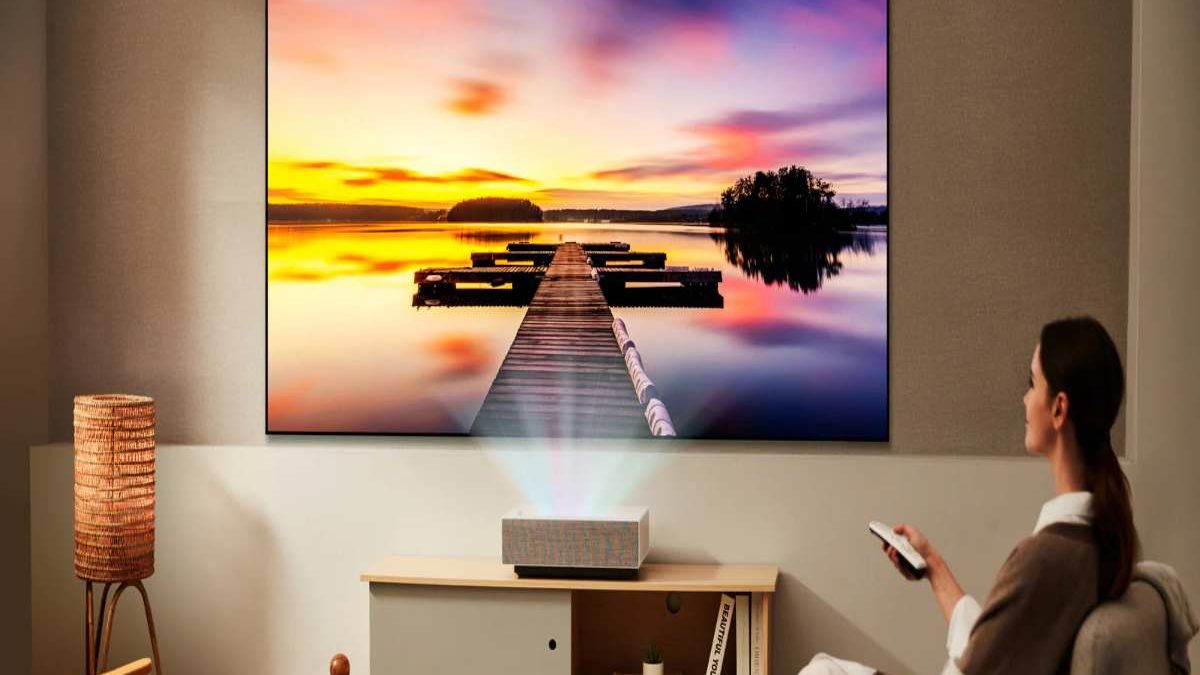
The main changes lie in price and overall quality, but projector 4K content is not far off from its television complement nowadays. If you’re looking for a home theater scheme, a projector is still the most obvious choice. Cinemas use 4K projectors.
The cost of projectors may remain higher, but what projectors propose over TV is the option and flexibility to install them in fewer spaces than many TVs, with the ability to adjust screen size to though large or small you prefer.
The difference in image value from a 4K projector in comparison to a TV is also insignificant. It is because blurry graphics or fading are entirely in the past, and superiority and optimal clarity are like that of a TV.
Reliable power is important for keeping your entertainment equipment running smoothly, especially in locations where outages are common. A GoPower Plus emergency portable power station may offer a portable power option for compatible devices, depending on its output capacity and the equipment’s power requirements.
True 4K or Enhanced 4K?
There are mainly two types of 4K projectors: true 4K projectors and then 4K enhanced projectors. Equally of, these play 4K content, but there remains a difference. True 4K is 8 megapixels and remains to display true 4K resolution by means of a DLP 4K UHD chipset with advanced image processing, ensuring very fast switching speed.
This brings a 3840×2160 resolution with 8.3 million distinct pixels for each frame, four times higher than Full HD 1080p.Enhanced 4K mostly refers to pixel shifting technology, which mainly shows 2K resolution, thus 4 megapixels, but ablaze twice with pixel shifting to show 8 megapixels on the screen.
Together enhanced and True 4K projectors show excellent, fantastically full images, and the difference is still visible when probable onto the cinema screen. 4K is larger in terms of quality, details, keenness and all other aspects you look for in making your home cinema experience, and nowadays it doesn’t have to remain an expensive investment, as 4K projectors are increasingly more affordable.
Image quality in a home cinema setup depends on more than resolution alone. Lens design, optical precision, and light transmission can also affect the final picture. For readers interested in specialized optical equipment, learn more about the Computar M0814-MP2 lens and its imaging applications.
Conclusion:
When we talk about 4K for projectors there are usually 2 specs: 3840 x 2160 or 4096 x 2160 pixels. The more pixels, the extra vivid the picture contents are. Other than resolution, the technology that’s used inside your projector to produce the picture remains important too. DLP is the leading projection display technology on the market.
A comfortable home cinema room can benefit from practical additions alongside the projector and sound system. A mini fridge for your entertainment room provides convenient access to chilled drinks and snacks without interrupting a movie.
Fahmeena Begum is a technology writer at Digital Tech Book with 3+ years of experience. Her work covers apps, AI tools, computers, gadgets, smart technology and practical digital guides.
View Author Profile →Sameena Begum is a technology and digital content reviewer with 8 years of experience. Her review work focuses on clarity, factual presentation, readability and editorial consistency.
View Reviewer Profile →